> For the complete documentation index, see [llms.txt](https://doc.anytype.io/anytype/llms.txt). Markdown versions of documentation pages are available by appending `.md` to page URLs; this page is available as [Markdown](https://doc.anytype.io/anytype/basics/sidebar.md).
# Sidebar
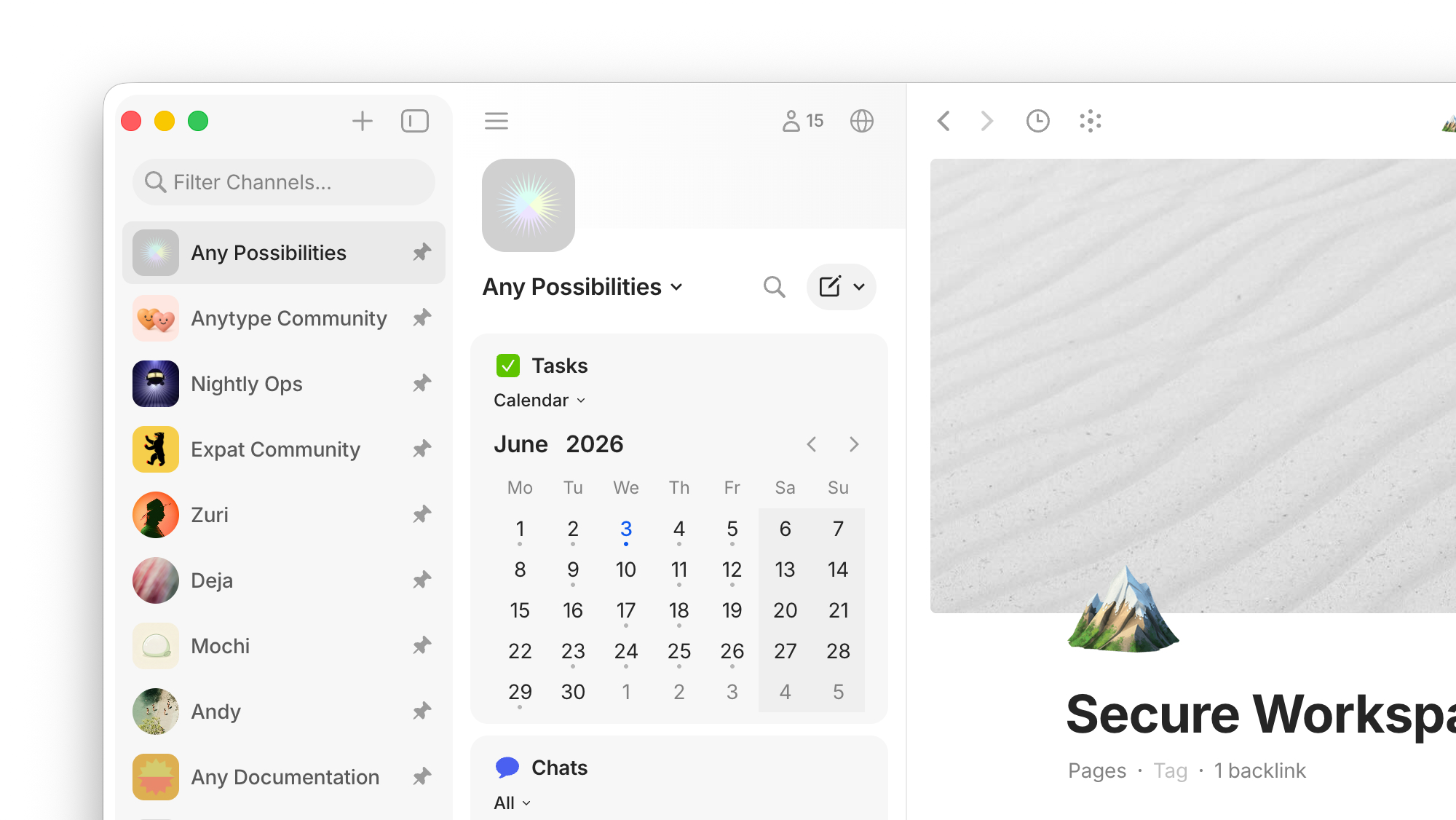
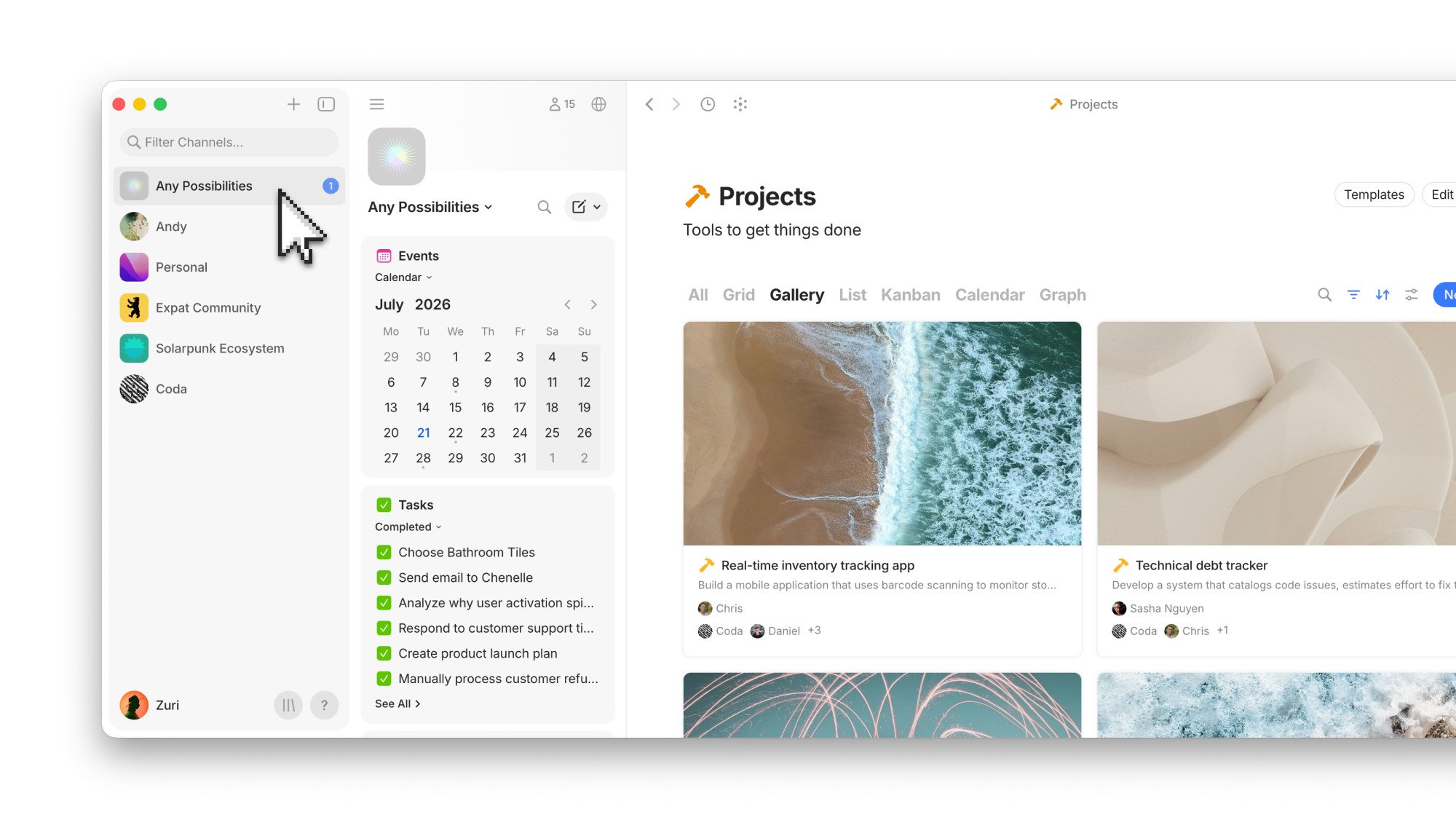
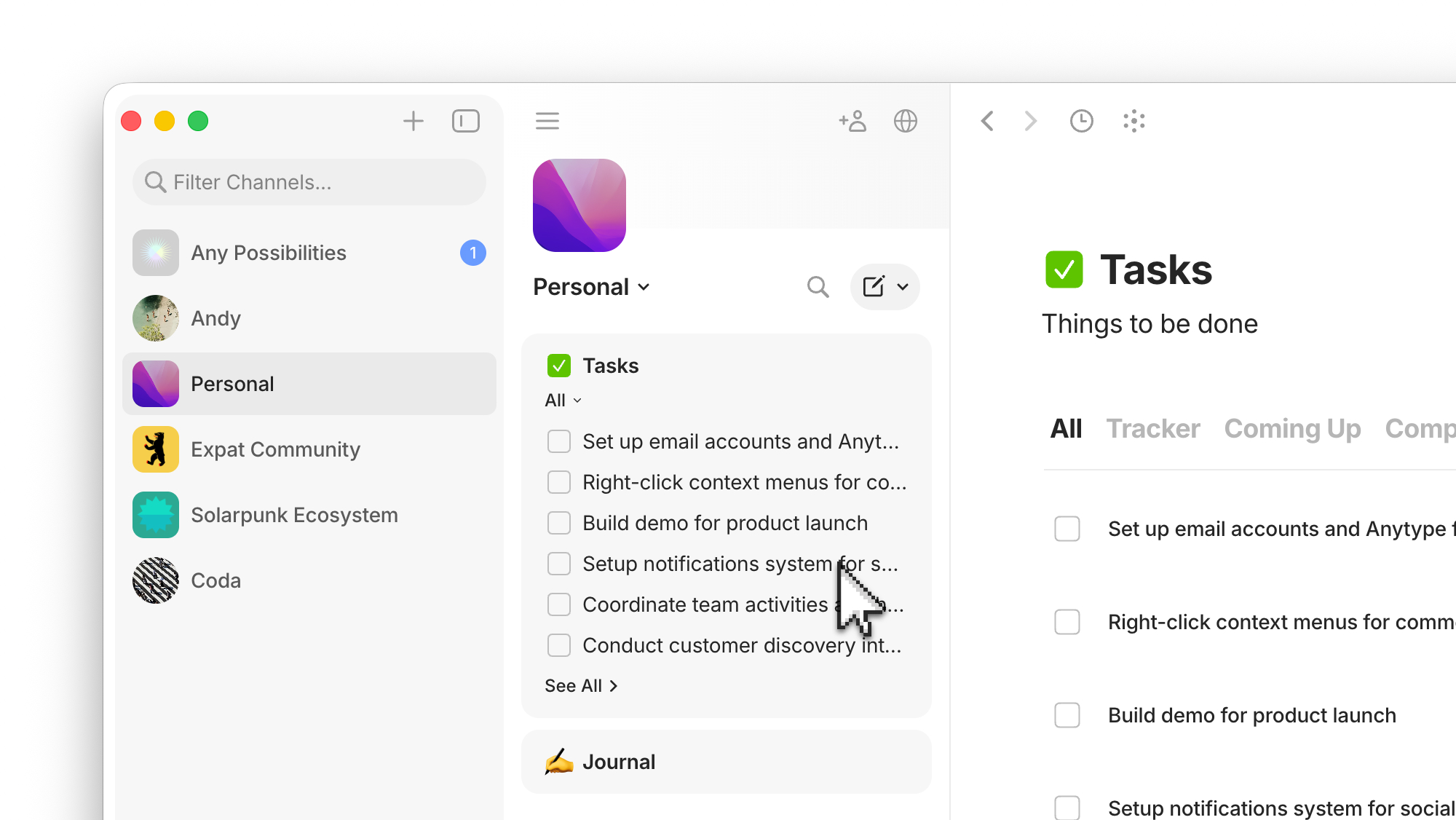
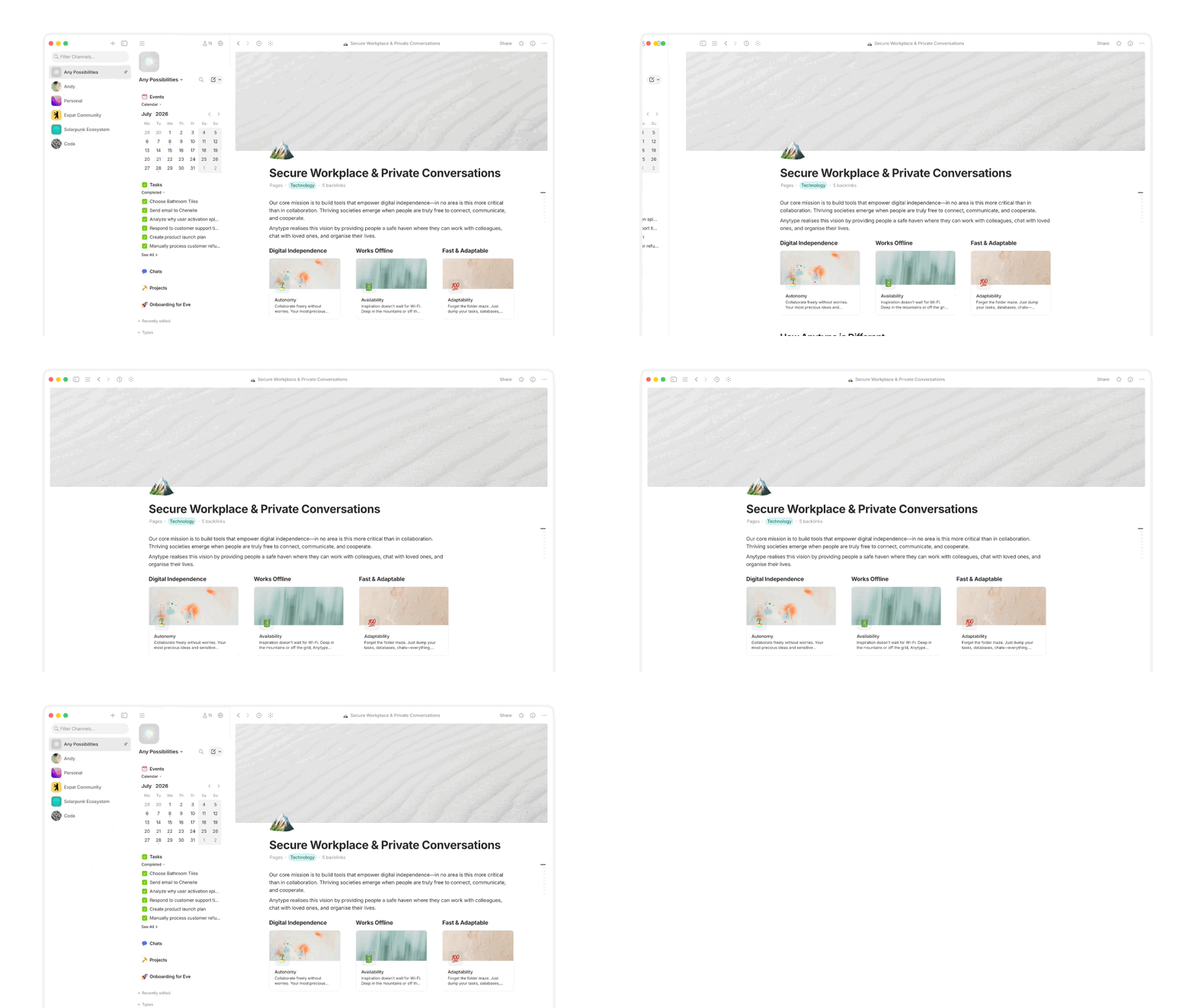
The Sidebar is the main navigation tool to move around Anytype.
1. **Vault Sidebar** — to move between all channels in your Vault.
2. **Channel Sidebar** — to create, navigate, and organize everything in your Channel.
## Vault Sidebar
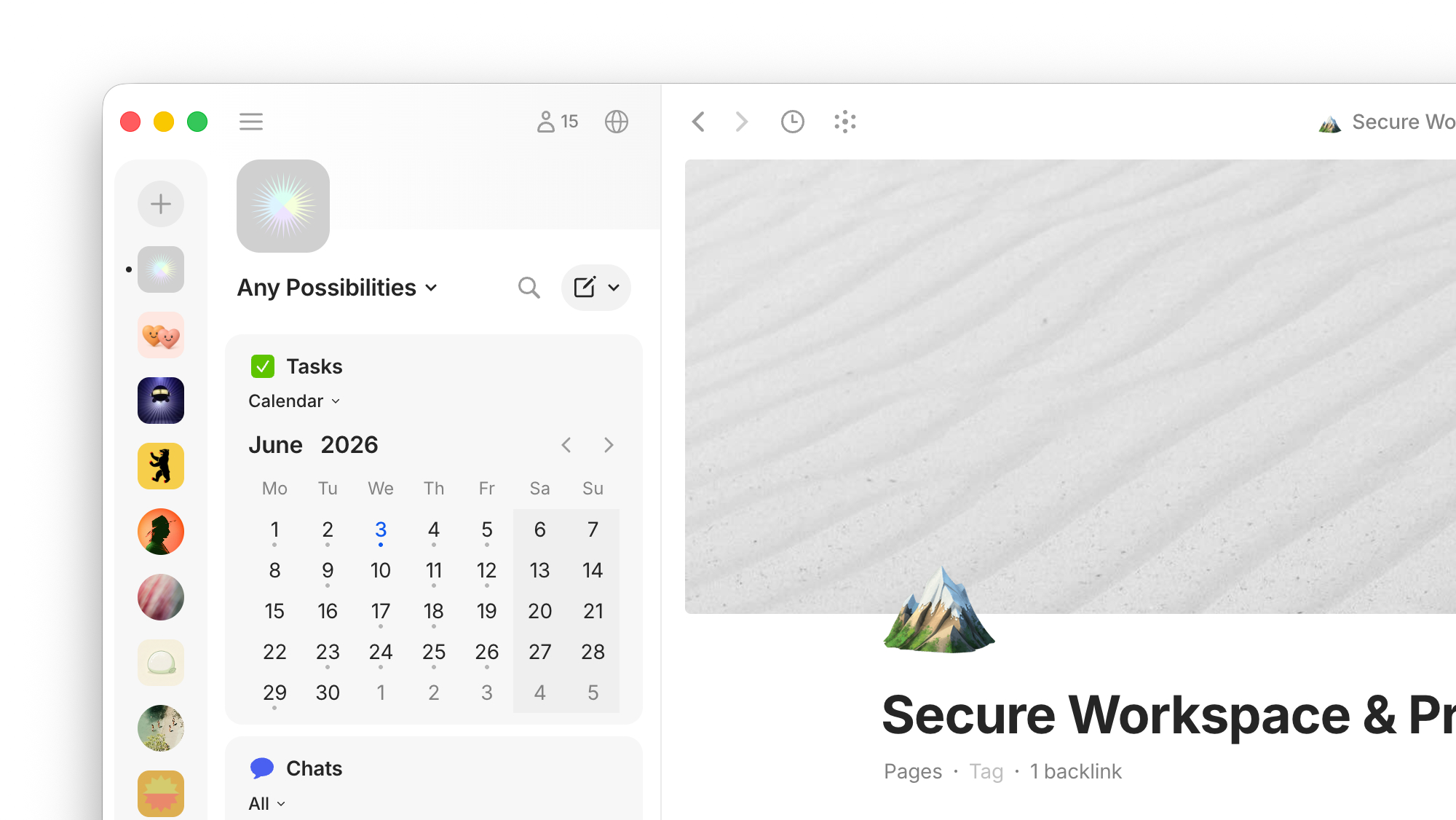
On the left is the Vault Sidebar. Here you can navigate at the highest level across all the various spaces you are part of. You will find:
1. [Channel List](/anytype/basics/channels.md) — all of the spaces you are part of
2. [Vault Settings](/anytype/settings/vault-settings.md) — ability to manage your account
3. [Keyboard Shortcuts](/anytype/settings/keyboard-shortcuts.md) — to customize your shortcuts
4. Resources — contact, release notes, version, etc.
## Channel Sidebar
The second panel is the Channel Sidebar. Here you can find everything that is inside your space. It is split into two areas, the Header and the Sections.
#### Header
At the very top, you'll see your Channel name and icon. You'll also find:
* **Create** — button to instantly add a new Object. The dropdown button reveals more options.
* **Search** — button to find any Object in this Channel.
* **Members** — button to see who's in the Channel and their roles.
* **Channel Menu** — access Channel Settings and manage sections in your sidebar.
#### Sections
Below the header are sections, which appear in this order by default:
1. **Pins** — Objects for everyone, set by the channel Owner.
2. **Favorites** — Objects for only you, set by you.
3. **Unread** — Notifications that display temporarily.
4. **Recently Edited** — Objects modified recently.
5. **Types** — Objects grouped by Type.
6. **Bin** — Objects archived that await permanent deletion.
Each section can be hidden, reordered, or fine-tuned. See [Widgets](/anytype/basics/sidebar/widgets.md) and [Sections](/anytype/basics/sidebar/sections.md) for details.
## Sidebar Settings
### Resize and Collapse
Drag the right edge of the Sidebar to resize it. You can:
* Make it wider for more space
* Make it narrower to save space
* Collapse it entirely by dragging the edge to the left until it disappears
* Turn on auto show/hide the sidebar in your [Vault Settings](/anytype/settings/vault-settings.md)
### Compact Vault Sidebar
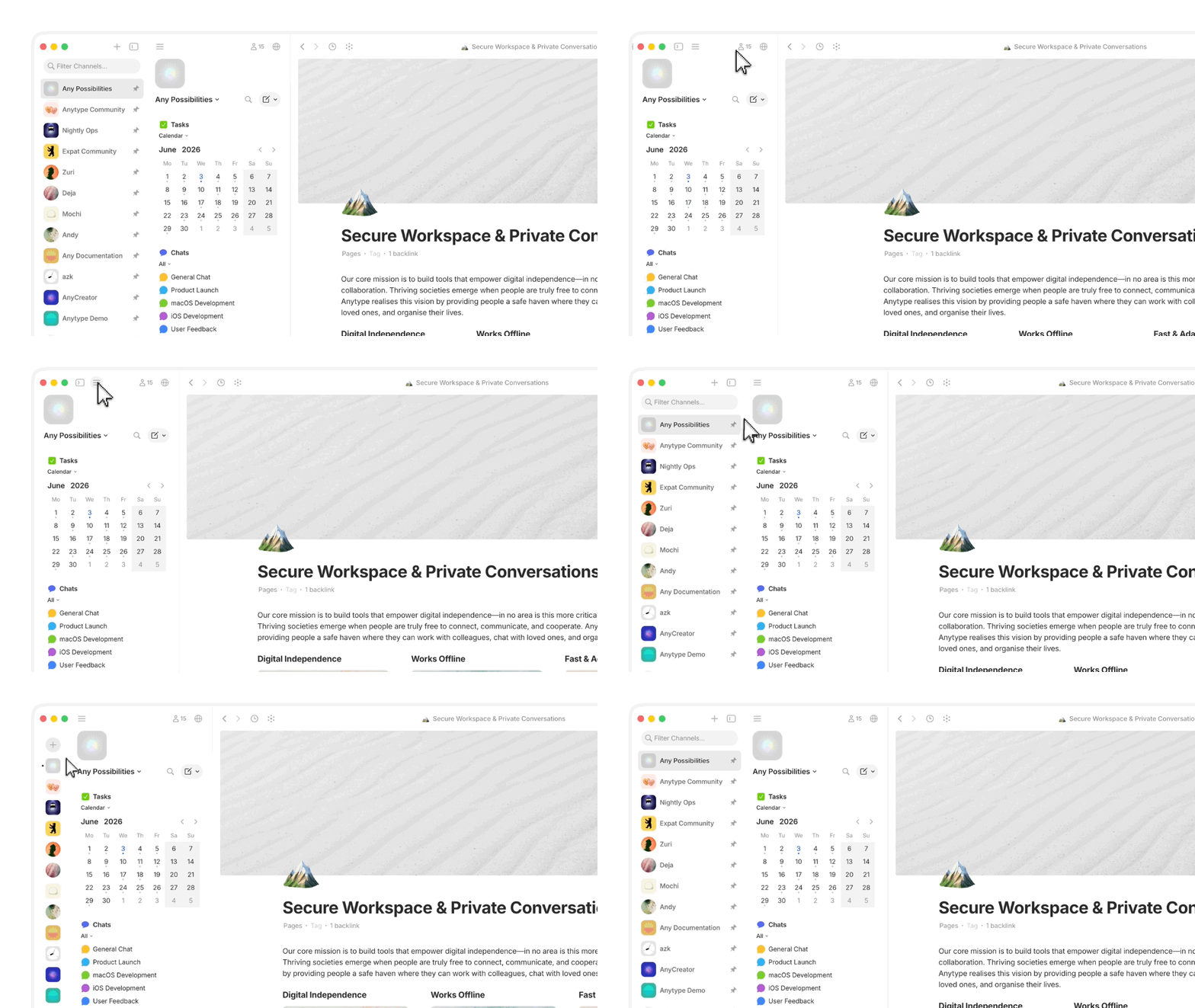
To gain more visual space, the **Vault** has a compact mode. This narrow and compact Vault layout helps to provide more content space. The Channel sidebar can also be resized for even more room.
Drag the Vault's right edge to make it narrower past a threshold and it'll automatically switch to compact mode. Drag the edge wider to return to the regular Vault Sidebar layout.
### Focus Mode
To quickly switch to a focus mode, you can assign a keyboard shortcut to toggle on and off the **Vault** and **Channel Sidebar** at the same time. This hides both sidebars for maximum content space.
1. Click `?` button in the bottom-left corner of the app in the Vault Sidebar,
2. Choose **Keyboard shortcuts**.
3. Find **Toggle Vault & Channel Sidebar**.
4. Assign a shortcut.
## Tips
{% hint style="info" %}
**Focus Mode with Tabs is handy for removing distractions from other channels.** When you're deep in work, hide both sidebars so you don't get distracted by other Channels and their notification badges. You can set up a custom keyboard shortcut to make this even faster.
{% endhint %}
{% hint style="info" %}
**Pin a Query, not just static Objects.** A pinned Query like "Tasks where Status = In Progress" or "Notes where Modified is this week" acts as live [Widgets](/anytype/basics/sidebar/widgets.md) — it updates itself as your data changes.
{% endhint %}
{% hint style="info" %}
**Switch to Links mode for archive Channels.** A Channel where you mostly read rather than create can benefit from the denser Links view — you see more at once.
{% endhint %}
---
# Agent Instructions
This documentation is published with GitBook. GitBook is the documentation platform designed so that both humans and AI agents can read, navigate, and reason over technical content effectively. Learn more at gitbook.com.
## Querying This Documentation
If you need additional information that is not directly available in this page, you can query the documentation by asking a question.
Perform an HTTP GET request on the following URL with the `ask` and `goal` query parameters:
```
GET https://doc.anytype.io/anytype/basics/sidebar.md?ask=&goal=
```
`ask` is the immediate question: it should be specific, self-contained, and written in natural language.
`goal` is what the user is ultimately trying to achieve, the reason they need the answer. Sharing it helps GitBook give you a better, more relevant answer. A goal is most helpful when it describes the outcome the user wants rather than restating the question. For example, with `ask=how do I create an API token`, a goal like `automate deployments from our CI pipeline` lets GitBook tailor the answer to that use case.
The response will contain a direct answer to the question and relevant excerpts and sources from the documentation.
Use this mechanism when the answer is not explicitly present in the current page, you need clarification or additional context, or you want to retrieve related documentation sections.